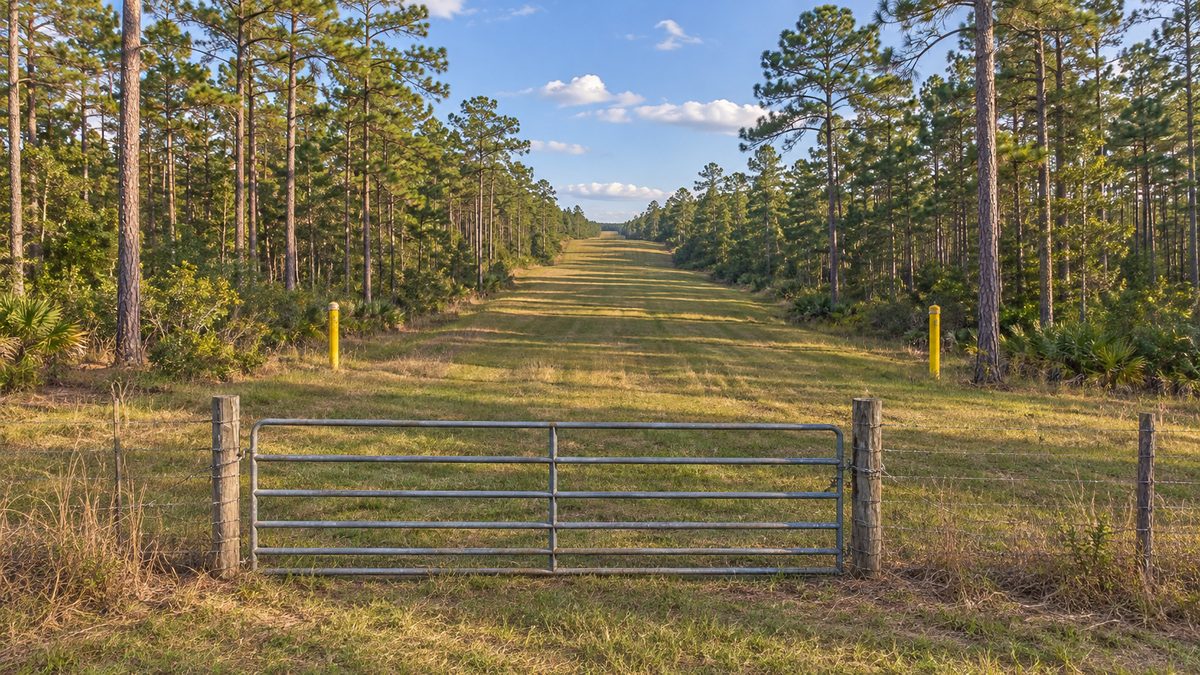
Florida Gas Transmission Company, LLC (FGT) has asked federal regulators to approve its Phase IX pipeline expansion. FGT's existing system runs about 5,400 miles, from South Texas along the Gulf Coast to South Florida (Florida Gas Transmission).
Phase IX does not build a new pipeline from end to end. It adds new pipe “loops” alongside the existing line in short sections, where extra capacity is needed. In Florida, those loops are in these counties (FGT application, FERC Accession No. 20260909-5184):
- Santa Rosa
- Walton and Holmes
- Liberty and Gadsden
- Jefferson, Madison and Taylor
- Lafayette
- Union
- Putnam
- Hillsborough
The project also upgrades existing compressor stations and adds new ones in Lake and DeSoto counties (Florida Gas Transmission).
If you own land along the existing FGT corridor, you may have already met a right-of-way agent, signed a survey permission form, or received a packet in the mail. This article explains where the project stands, what an agent's visit means, and what to think about before you sign an easement.
Where the Phase IX Project Stands Today
FGT filed its application with the Federal Energy Regulatory Commission (FERC) on September 9, 2026, under Docket No. CP26-578-000. Across Mississippi, Alabama and Florida, the project includes (Federal Register):
- Nine pipeline loop segments totaling 94.6 miles of new pipe. Eight of the nine are in Florida, about 84.5 miles in total.
- Upgrades to 13 existing compressor stations.
- Two new Florida compressor stations, in Lake and DeSoto counties.
| Florida loop | County | Approx. miles |
|---|---|---|
| Loop 2 | Santa Rosa | 14.84 |
| Loop 3 | Walton – Holmes | 14.34 |
| Loop 4 | Liberty – Gadsden | 13.71 |
| Loop 5 | Jefferson – Madison – Taylor | 14.85 |
| Loop 6 | Lafayette | 14.00 |
| Loop 7 | Union | 6.11 |
| Loop 8 | Putnam | 3.06 |
| Loop 9 | Hillsborough | 3.57 |
Source: FGT application, FERC Accession No. 20260909-5184. Loop 1 (10.15 miles) is in Mississippi.
The project is not approved yet. FERC's public comment period on environmental issues closed on November 23, 2026. FERC staff will now decide whether to prepare an Environmental Assessment or a full Environmental Impact Statement (Federal Register).
FGT expects construction from the fourth quarter of 2027 through the fourth quarter of 2028, depending on final approvals, with the project placed in service in late 2028 (Florida Gas Transmission).
Public interest is high. More than 130 public filings are already in the FERC docket, and the Lake County Board of County Commissioners voted unanimously to oppose the proposed compressor station near Umatilla (Daily Commercial).
Why an Agent May Already Have Contacted You
FGT says its right-of-way personnel “are making direct contact with affected and abutting landowners” (Florida Gas Transmission). In its FERC application, FGT stated it had received survey permission from 100 percent of affected landowners (FERC Accession No. 20260909-5184).
That means most owners along the route have already had at least one conversation with a land agent. Usually that first contact is about survey access: letting crews walk the land, stake the line, and test soil or wetlands.
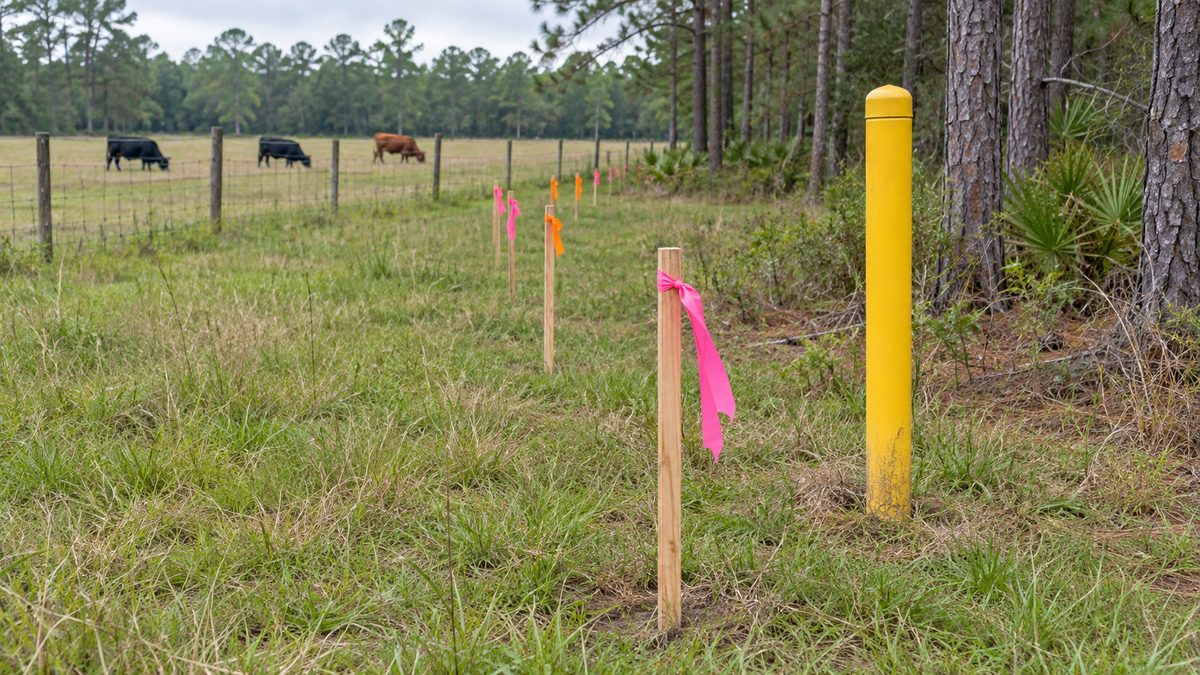
A survey permission form is not an easement, and it does not set what you will be paid. Still, read every form before you sign it. Some forms include release or damage language that is worth understanding first.
What the Company Will Ask For Next
After surveys, the next step is usually an easement offer. For a looping project like Phase IX, the request often has several parts:
- A new permanent easement. A strip of land, usually next to the existing FGT easement, where the new pipe will sit permanently.
- Temporary workspace. Extra land used during construction for equipment, trench spoil and pipe storage. It is returned when construction ends.
- Extra workspace and access roads. Needed at road, creek and wetland crossings, and where FGT drills under features instead of digging a trench.
Many owners on this route already have an FGT easement from an earlier project. The new loop is a separate request. Your old easement does not set the price or the terms for the new one.
FERC's own notice tells landowners: “You are not required to enter into an agreement.” The notice also explains that if FERC approves the project, the Natural Gas Act gives the company the power of eminent domain, and if no agreement is reached, the company may go to court (Federal Register).
The Easement Terms Matter as Much as the Price
Owners often focus on the dollar figure. The written easement terms, however, will control your land for decades. Before signing, understand how the document handles:
- Width and location. Is the strip fixed on a survey drawing, or can the company move it later?
- Number of pipelines. Does it allow one pipe, or “one or more” pipelines?
- Depth of cover. How deep will the pipe be buried under fields, pasture and timber?
- Timber, crops and fences. How will cut timber, lost crops, gates and livestock fencing be handled?
- Drainage and restoration. Who fixes ruts, washouts, compaction and changed drainage after construction?
- Access. Which roads and gates will crews use, and what happens if a gate is left open?
- Use of the strip. What will you still be allowed to do over the easement, such as crossing it, building a driveway or fence, or planting?
- Future damages. Who pays for damage from future maintenance or repair work?
- Assignment and abandonment. Can the easement be transferred to another company? What happens if the pipe is no longer used?
Each of these terms can affect the value of your remaining land, not just the strip itself.
How Compensation Is Decided if There Is No Agreement
If FERC approves the project and an owner and FGT cannot agree, FGT can file a condemnation case, and a court decides compensation (Federal Register).
FGT has used this process in Florida before. In a 2021 federal case over its earlier Putnam County expansion, the court noted that FGT had offered “at least $3,000” for easements that the owners turned down, and the company then asked the court to take the easements (M.D. Fla. Case No. 3:21-cv-00236). Every parcel is different, and that figure does not predict any Phase IX offer. It does show that the first offer is not always the final word.
There is also an open legal question. The U.S. Supreme Court is considering Hoffman v. WBI Energy Transmission, Inc., which asks whether state law or federal law sets “just compensation” when a pipeline company takes land under the Natural Gas Act (SCOTUSblog). The answer may affect what Florida owners can recover, including whether attorney's fees are part of compensation. A decision is expected in 2027.
Seven Steps to Take Now
- Keep everything. Save every letter, packet, business card, text and email from FGT or its agents, with the date you received it.
- Write down each conversation. Note the date, who you spoke with, and what was said or promised.
- Find your existing easement. If FGT already crosses your land, get a copy of the recorded easement from the county Clerk's official records.
- Photograph your property now. Document fences, gates, drainage, timber, crops, wells and driveways before any construction.
- Look at the public maps. FGT's route maps are filed in the public FERC docket (CP26-578-000). Compare them with your property lines.
- Don't sign under pressure. You are allowed to take time to review an easement or offer, and to ask for changes in writing.
- Ask questions early. The best time to get advice is before you sign, not after a court case is filed.
Talk With a Florida Property-Rights Lawyer
Loper Law Group, P.A. represents Florida landowners in property-rights, easement and eminent domain matters. If you own land along the Phase IX route and want to talk through an agent's request, a survey form or an easement offer, contact us or call (704) 248-1859.
Fee terms are put in a written agreement before any work begins. Some matters involve separate costs, such as appraisals or surveys, and we explain those costs in writing up front.
See also: How Florida Eminent Domain Compensation Is Actually Calculated · Project Notices in the Mail: What Florida Homeowners Should Do Next.